
Football
LSU Reportedly Looking to Sell Jersey Advertisements after Brian Kelly Dismissed OSU’s QR Codes Last Year
‘Putting a QR code on your helmet just doesn’t feel collegiate for me,’ Kelly said.

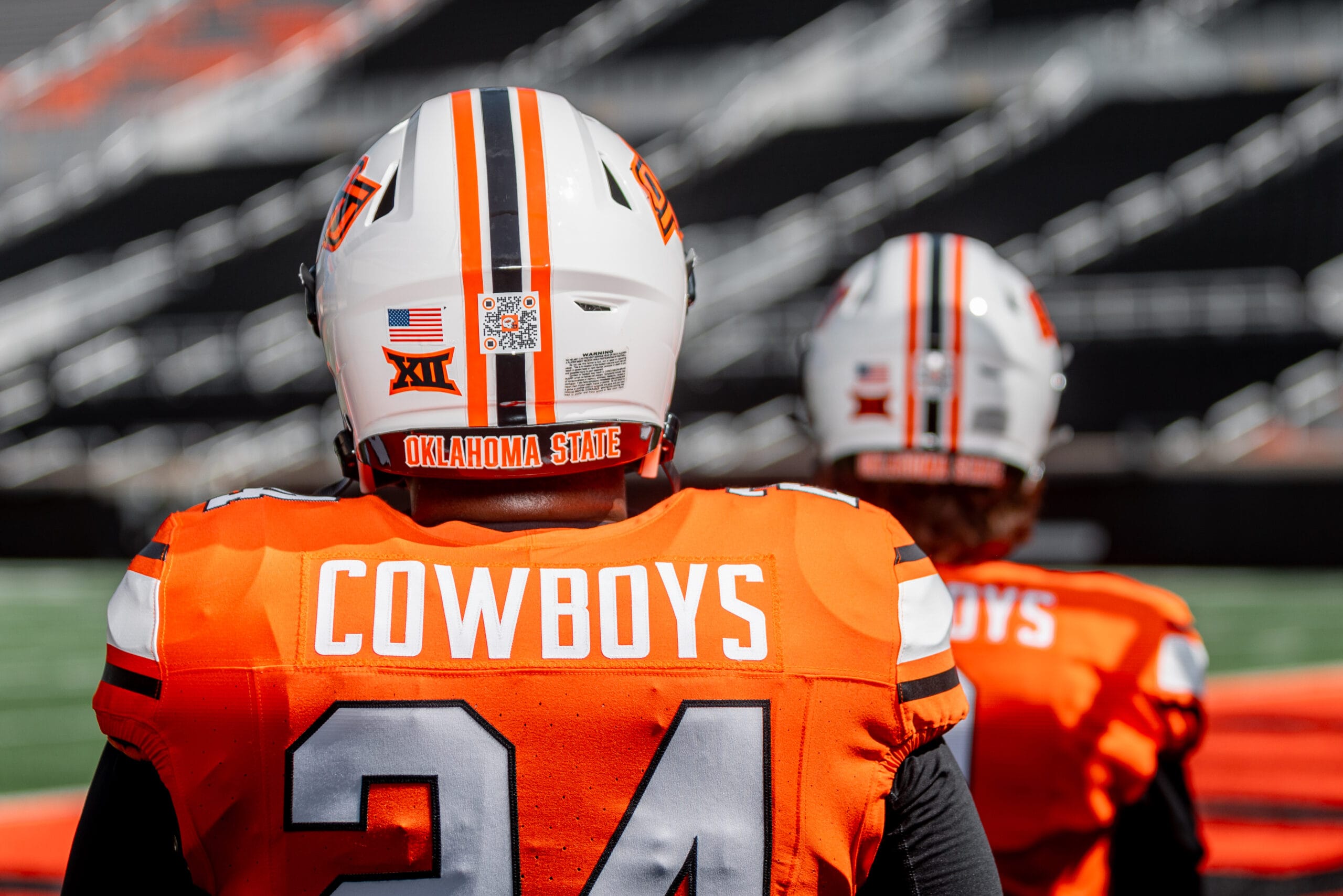
College athletic departments are looking for new revenue streams with the House v. NCAA case resulting in revenue share for student-athletes.
A report surfaced last week via Nola.com that LSU is looking to sell a jersey-patch sponsorship (see Love’s on the Thunder jerseys) to help increase revenue. It’s a fine idea, but it comes off a little odd given LSU coach Brian Kelly’s response to OSU looking into sticking QR codes on the Cowboys’ helmets last season.
“For us, we can keep NIL off the field,” said Kelly on an SEC teleconference call last year. “I think we can generate the things that we need here at LSU separate from the gameday atmosphere, the collegiate kind of feel that you have. This is just my personal feeling, putting a QR code on your helmet just doesn’t feel collegiate for me. As much as we continue to keep this game when the band and college-aged kids playing the game (we should). I get it, right? NIL is here to stay and that’s great, but I think we can separate from that and still, at the end of the game, got to work on NIL.”
Now, a lot has changed since Kelly said that — most notably revenue share being pushed through — and it’s not clear what his thoughts are on jersey patches. But, getting your feathers ruffled over a QR code then going and slapping a company logo on your jerseys certainly comes off a bit hypocritical.
Whether or not the NCAA will allow the Tigers to add the patches is a separate issue. OSU announced the QR codes just for the NCAA to come back and deny it. Those QR codes caused quite the stir — evident by the fact that LSU’s coach was asked about it — but it turns out the Cowboys might’ve just been ahead of their time. That’s something OSU AD Chad Weiberg alluded to in the release after the NCAA blocked the move.
“Our people came up with an innovative concept to raise NIL value of our student-athletes,” Weiberg said, “but ultimately, it just serves as the latest example of how college sports are evolving at a faster pace than the rule book.”
After the NCAA blocked the QR codes, OSU coach Mike Gundy went as far as questioning the NCAA’s authority given the Wild West landscape but ultimately landed on it not being worth the fight.
“They said it was a uniform violation,” Gundy said. “I don’t agree with that, but what I didn’t want to do is take a chance on them trying to drop the hammer on a player because that wouldn’t be fair to the player. Now, if it was me — if they were gonna drop the hammer on me — I don’t care. I would’ve wore it. But I don’t want a player to get penalized for something like that, so I just said it’s not worth it. I don’t know what authority they have anymore, but I don’t want to take a chance on them trying to penalize a player for something that we could avoid.”
To me, the QR Codes were a little silly, not because of what they represented but moreso how they would’ve functionally worked. Like, how often would a player be standing still long enough on my TV screen for me to whip my phone out and scan the code? You could perhaps argue that all the hubbub surrounding them gave OSU’s NIL efforts some publicity.
All of this is just another example of the rapidly evolving landscape of college athletics. The money has to come from somewhere.


Report: Oregon’s Roster Cost at Least $29 Million More than OSU’s, the Gap Between the Rest of the Big 12 Isn’t That Big

Three Things to Know Ahead of Oklahoma State’s Matchup Against Murray State

ESPN’s Rece Davis Apologizes for ‘Snarky’ Comment Predicating OSU’s Home Opener Streak to End

Murray State Coach Jody Wright Has a Nickname for Drew Mestemaker

PFB Picks: Predicting Oklahoma State’s Week 3 Game Against Murray State

Three Takeaways from the Oklahoma State-Murray State Rewatch

Pistols Firing Podcast Ep. 723: Points and Boone Baptisms Galore

Oklahoma State Receiving Votes in AP Poll

Carson Benge Sets New York Mets Rookie Hit Record

Daily Bullets (Sept. 20): Takin’ Care of Business
-
 Football4 days ago
Report: Oregon’s Roster Cost at Least $29 Million More than OSU’s, the Gap Between the Rest of the Big 12 Isn’t That Big
-
 Football4 days ago
Three Things to Know Ahead of Oklahoma State’s Matchup Against Murray State
-
 Football4 days ago
ESPN’s Rece Davis Apologizes for ‘Snarky’ Comment Predicating OSU’s Home Opener Streak to End
-
 Football4 days ago
Murray State Coach Jody Wright Has a Nickname for Drew Mestemaker