
Hoops
Looking at the Other Metrics Involved in Building a Bracket

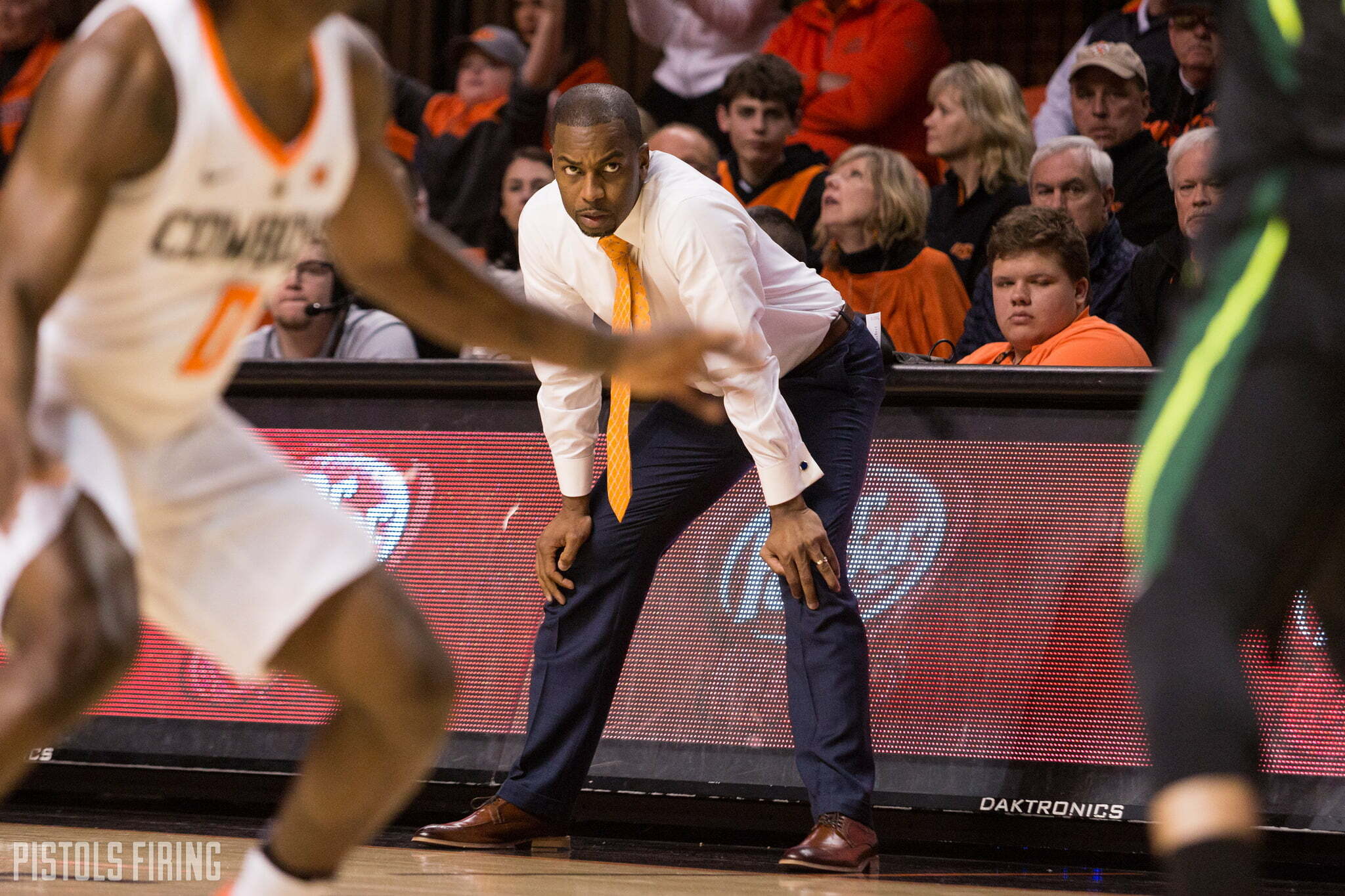
With their chance to make history against Kansas and solidify their case for an NCAA Tournament berth, the Cowboys fell short on Thursday. Now what’s left is a long weekend of waiting and hashing out the differences between the Pokes and the other teams “on the bubble.”
Joe Lunardi, ESPN’s Bracketology guru, has especially endeared himself to Oklahoma State fans over the last week, falling on the RPI sword, a noted antiquated and arbitrary stat. Will the other half dozen stats that favor the Cowboys’ case prevail, or will members of the committee hold an unfortunate and somewhat unlucky nonconference schedule against an OSU team that has very clearly looked the part of a Tournament team over the last month?
Earlier this year, ESPN’s Myron Medcalf wrote about some changes that we might expect to the selection process this season — the addition of five additional metrics that would be reviewed by each committee member along side the RPI rankings.
They are the following: ESPN’s BPI rating, ESPN’s strength of record, KPI, Jeff Sagarin‘s rating and Ken Pomeroy’s rating.
Each metric is linked for a more thorough explanation, but as briefly as possible, here are what they represent.
BPI or the “College Basketball Power Index” is ESPN’s stat that serves as a predictor of a team’s success moving forward. The SOR (strength of record) serves to quantify how difficult a team’s W-L record was to achieve.
KPI rankings are based on a mathematical formula that treats all games equally (unlike the weighted RPI) using a scale from -1.0 to +1.0 in tenths from worst loss up to best win.
Sagarin rankings were developed by Jeff Sagarin, a statistician that is way smarter than most of us, and his the recipe is somewhat of a secret. But they have been used by the committee for 35 years.
And KenPom.com is one of the more quoted references on this website. His ratings are based on his own adjusted efficiency, combing offense and defense.
So, using Lunardi’s most recent list of teams on the bubble, let’s look at each of those rankings beside the RPI. In bold are the rankings above 68. None represent an end-all, be-all of whether or not a team should be in or out. But I thought it would be interesting to see each of these team’s other metric side-by-side. It paints a more complete picture of these teams’s numbers, and shows just how difficult the committee members’ current task is.
These numbers are as of Thursday night and will change as the conference tournaments play out.
| Last Four Byes | ESPN BPI | ESPN SOR | KPI | Sagarin | KenPom | RPI |
|---|---|---|---|---|---|---|
| Providence | 74 | 46 | 34 | 59 | 70 | 42 |
| USC | 49 | 61 | 35 | 45 | 47 | 35 |
| Baylor | 35 | 43 | 54 | 29 | 32 | 59 |
| Texas | 41 | 30 | 39 | 30 | 38 | 49 |
The last four at-large bids according to Lunardi, these teams should be safe in his mind save for any absolute crazy finishes.
| Last Four In | ESPN BPI | ESPN SOR | KPI | Sagarin | KenPom | RPI |
|---|---|---|---|---|---|---|
| Oklahoma | 43 | 38 | 30 | 36 | 48 | 38 |
| UCLA | 55 | 56 | 37 | 42 | 43 | 39 |
| Alabama | 53 | 64 | 25 | 52 | 51 | 57 |
| Louisville | 31 | 40 | 53 | 22 | 34 | 46 |
Oklahoma did most of their damage in a 14-2 first half of their season but fell apart like few teams ever, finishing 4-11 and losing twice to you know who. These teams could still get knocked out by an upset or two according to Joey Brackets.
| First Four Out | ESPN BPI | ESPN SOR | KPI | Sagarin | KenPom | RPI |
|---|---|---|---|---|---|---|
| Oklahoma State | 58 | 44 | 50 | 45 | 54 | 87 |
| Notre Dame | 32 | 52 | 60 | 24 | 30 | 65 |
| Arizona State | 47 | 69 | 38 | 48 | 44 | 51 |
| Marquette | 45 | 41 | 46 | 46 | 50 | 56 |
Oklahoma State is Lunardi’s first team out. They would seem like a solid lock for the field if not for that RPI-sized elephant in the room.
If a team like Louisville were to get smoked in the ACC Tournament quarterfinal, it might benefit OSU. But that remains to be seen.
| Next Four Out | ESPN BPI | ESPN SOR | KPI | Sagarin | KenPom | RPI |
|---|---|---|---|---|---|---|
| Syracuse | 52 | 50 | 47 | 50 | 55 | 37 |
| Penn State | 27 | 57 | 67 | 38 | 29 | 80 |
| Boise State | 57 | 55 | 59 | 56 | 52 | 41 |
| Nebraska | 62 | 36 | 64 | 62 | 56 | 63 |
These four are on the outside looking in and would need some series of miraculous events to unfold to get in according to Lunardi.
No one of these rankings are meant to be a strict qualifier (or disqualifier) but represent drawer full of tools to build the whole bracket. With the human element involved, there is always the likelihood of subjective outcomes and therefore the risk of mistakes. Let’s just hope the committee uses all of their tools, not just the ones they’re used to.


Welcome to Stillwater: Eric Morris Kills Lawn-Wrecking Armadillo in the Middle of the Night

The 10 Oklahoma State Football Players I’m Most Excited to Watch in 2026

Oklahoma State in Top Half of Big 12 According to Preseason AP Poll

NFL Update: Several Former Cowboys Made Plays in Week 1 of the Preseason

Recent Walk-On Carson Kolb Emerges as Unlikely Starter Following ‘Minor Injuries’ at Tight End

Three Takeaways from My North Texas 2025 Season Rewatch

‘This Logo Holds A Lot of Weight’: Drew Mestemaker Talks Expectations, Motivations and More in Barstool Interview

Daily Bullets (Aug. 21): Brandon Weeden on Mestemaker, Cowgirls Drop Bedlam

OSU Soccer: Cowgirls Drop Bedlam Match 2-0

Former Oklahoma State Corner Kenneth Harris Among Highest-Graded Rookies in Preseason Week 1
-
 Football3 days ago
Welcome to Stillwater: Eric Morris Kills Lawn-Wrecking Armadillo in the Middle of the Night
-
 Football4 days ago
The 10 Oklahoma State Football Players I’m Most Excited to Watch in 2026
-
 Football4 days ago
Oklahoma State in Top Half of Big 12 According to Preseason AP Poll
-
 Football4 days ago
NFL Update: Several Former Cowboys Made Plays in Week 1 of the Preseason